
 by development.emi
 No Comments

While academic learning like numbers and alphabets is important, emotional learning plays an equally critical role in a child’s overall development. In the early years (ages 2–5), children are constantly experiencing new feelings but may not always understand or express them properly.
Helping children understand emotions at this stage builds a strong foundation for their future behavior, relationships, and confidence.
Why Emotional Learning Matters
Children who develop emotional awareness early are better able to:
- Express their feelings clearly
- Build healthy relationships
- Manage frustration and anger
- Adapt to new environments
These skills not only help in childhood but also play a major role in long-term success and well-being.
How Children Learn Emotions
Unlike academic concepts, emotional learning does not come from textbooks. Children learn emotions through everyday experiences such as:
- Conversations with parents
- Observing how adults react
- Playing with others
- Listening to stories and situations
They learn by seeing, feeling, and practicing emotions in real life.
Signs Your Child Needs Emotional Support
- Frequent tantrums or frustration
- Difficulty expressing feelings
- Trouble sharing or playing with others
- Sudden mood changes
These are not “bad behaviors” but signals that the child needs guidance in understanding emotions.
What Parents Can Do
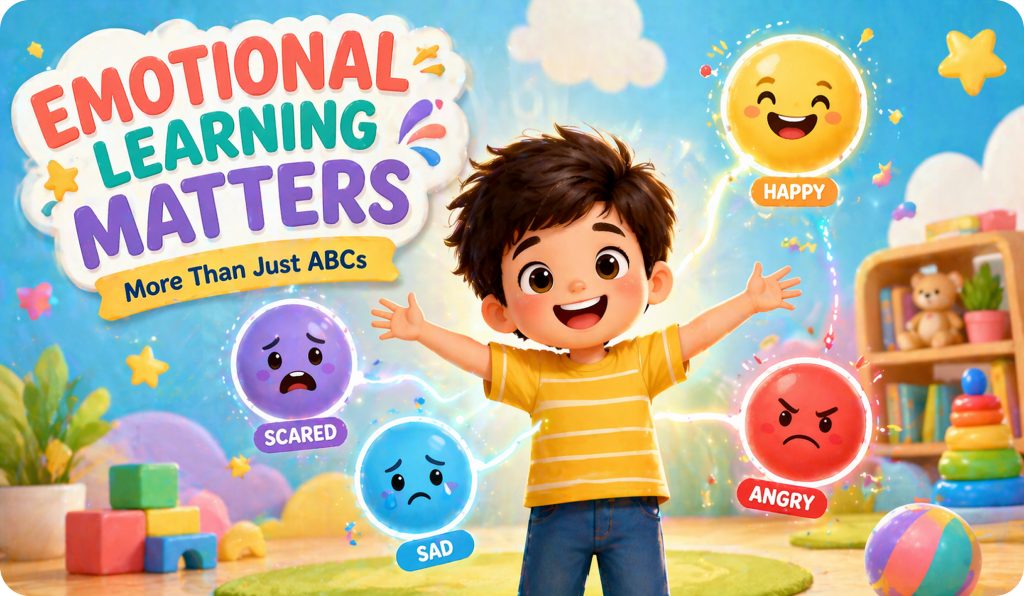
- Talk about emotions daily (happy, sad, angry, scared)
- Encourage children to express how they feel
- Use storytelling to explain situations
- Stay calm and patient during emotional moments
Small, consistent efforts make a big difference in emotional growth.
Conclusion
Emotional learning is not an extra skill — it is a basic life skill. When children learn to understand and manage their emotions early, they grow into more confident, balanced, and socially aware individuals.