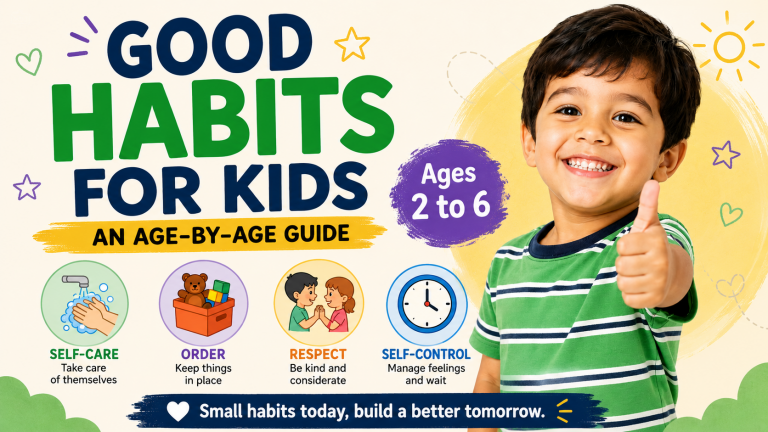
Good Habits for Kids: An Age-by-Age Guide for Ages 2 to 6 Good habits for kids are small actions a child repeats until nobody has to ask any more — washing hands before eating, putting shoes on the rack, waiting for a turn. They form fastest between ages two and six, because at that age […]
Key Takeaways: – Increasing use of gadgets and a poor lifestyle can impact a child’s behavior. – Creating a supportive environment at home is crucial for kids aged 2 to 7 years old. -Interactive games and activities help to build life skills and values in a child. – Holistic human development programme develops a strong […]
The habits, routines, and activities that shape who your child becomes Every parent wants their child to grow up to be a person, a confident person and a resilient person. Sometimes when we are busy taking our child to school and trying to limit the time they spend watching screens and negotiating with them at […]
In today’s generation, parents cannot stop thinking about how to keep their kids safe, not just from getting hurt but also from extreme emotions. We all know that vaccinations help keep our bodies healthy, but there is something that is much more important: Children Character Vaccination. The way vaccinations help our bodies fight off germs […]
Key Takeaways Repetition is normal and developmentally healthy for children aged two to five; familiarity makes them feel safe and in control. Rewatching is active learning, not passive viewing. Each replay teaches a new layer of vocabulary, patterns, and cause and effect. The same repeat-until-it-sticks mechanism drives personality development for kids, which is why what […]
Key Takeaways Screen time’s effect on emotional development is gradual, which is why it is easy to miss. Notice patterns over months, not single days. Children learn emotions through responsive, real time interaction with people, something a one way screen cannot provide, which is why social emotional learning for kids depends so much on everyday […]
Key Takeaways Play, not lessons, is how toddlers build brain connections. Between ages two and five, the brain forms connections faster than at any other life stage, and games drive most of that growth. Sorting, stacking, pretend play, memory games, music, and outdoor movement each build a different set of skills — spatial reasoning, language, […]
Many parents notice that their 4–5-year-old prefers watching content designed for younger children. This can feel confusing, especially when you expect them to move toward more age-appropriate learning. However, this behavior is quite common and often linked to how children manage their emotions. Why This Happens Children sometimes go back to simpler content because it […]
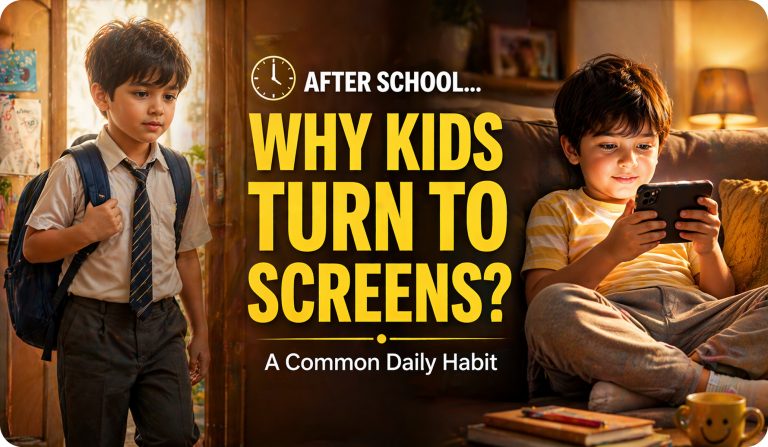
After coming home from school, many children immediately ask for a phone, tablet, or TV. While it may look like they are trying to relax, this behavior often has deeper reasons. What’s Really Happening School environments can be overwhelming. Children deal with noise, instructions, social interactions, and structured routines throughout the day. By the time […]
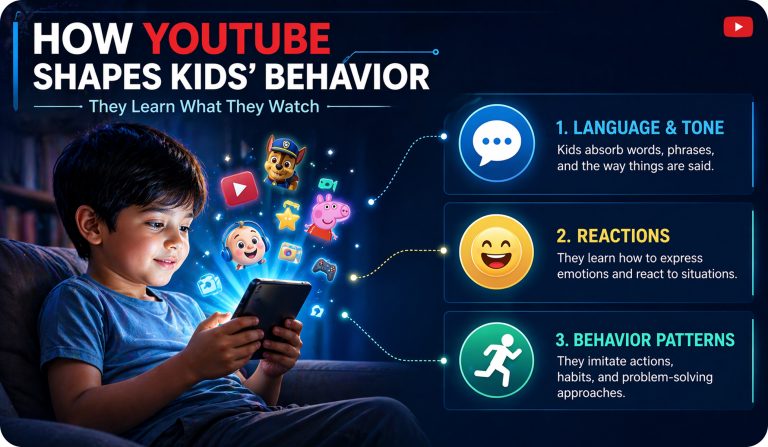
Online platforms like YouTube have become a major source of entertainment for children. While they offer a wide variety of content, not all of it is suitable for young minds. Children do not just watch content — they absorb and imitate it. How It Affects Behavior Children often copy what they see on screen, including: […]