COPPA

Verifiable parental consent before your child’s first session. Plain English on what we collect, before we collect it.

Todemy brings all of it into one connected programme.
The 5 Senses program
Ages 2 to 6 · No levels · No scores · Nobody left behind Academics. Body. Mind. Behaviour. Character. One programme, one app, one child.
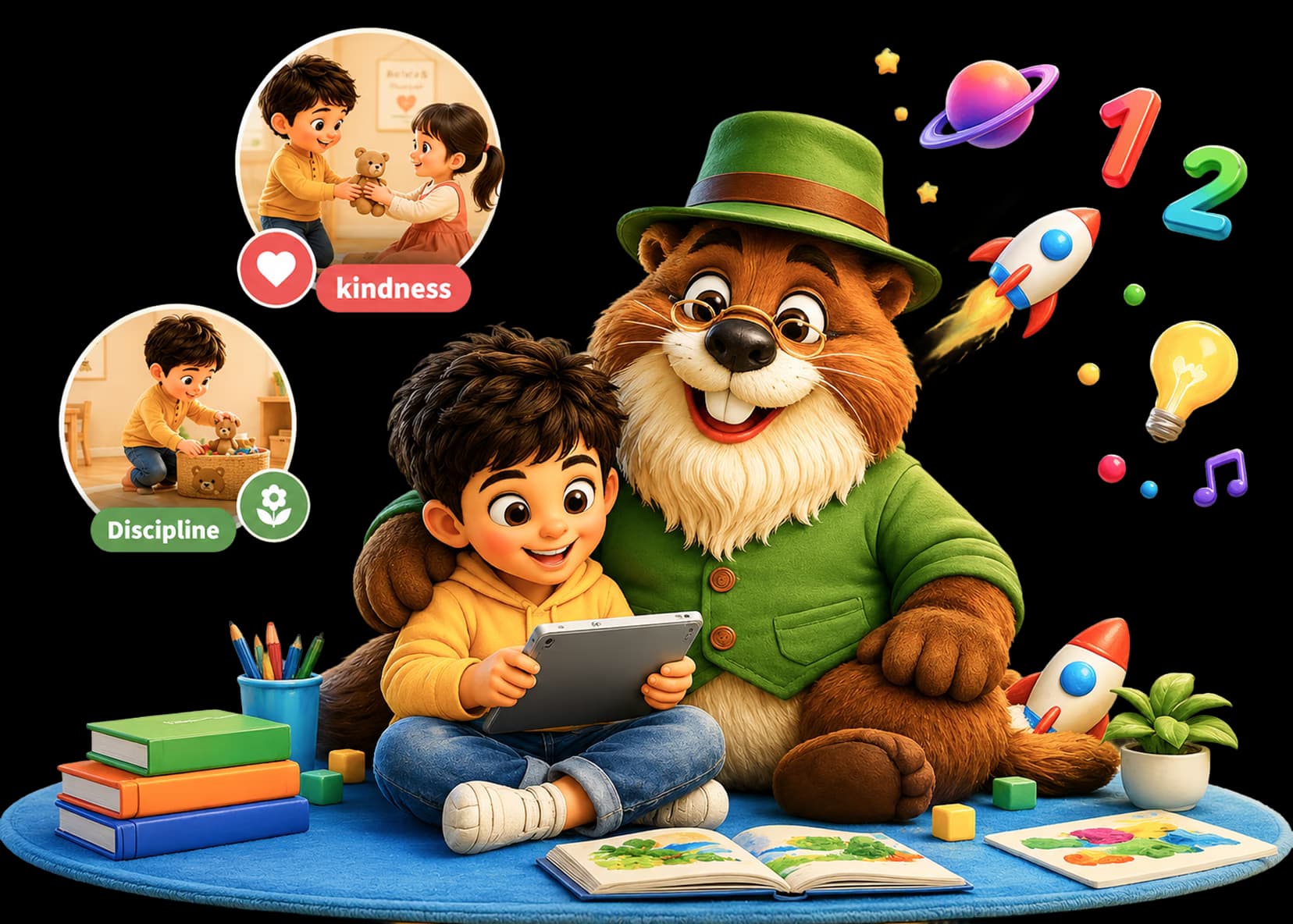

Uncle Boopi listens, answers what your child actually said, and remembers what they managed last time. He works on the whole child, the letters and the numbers, the body and the plate, the feelings and the manners, and he does not treat any one of them as separate from the rest.
What your child tells him stays inside the app. Never sold, never advertised against, never used to train anything, and yours to delete at any time.
No more than thirty minutes on the screen, and less than that for a younger child, plus ten minutes off it, with you. Those ten are where it becomes real. Practised in the morning, used at your table by dinner.


• Android • iOS • Your TV
One account across all
You are about to let something talk to your child. Here is exactly what it can and cannot do.
Verifiable parental consent before your child’s first session. Plain English on what we collect, before we collect it.

See it. Correct it. Take it. Delete it. Withdraw consent. Any time, no reason needed.

An outside firm audits our security controls. How data is stored. Who can reach it. What happens when something goes wrong.

Independent app security verification. What Google requires for apps handling sensitive user data.

Encrypted while it moves. Encrypted while it sits.

No open internet, no search, no improvising. He follows a syllabus written and reviewed by child specialists s and early years educators, covering every side of a child’s growth, and both halves of the conversation are checked, what your child says and what he says back. Anything outside the 2 to 6 programme he redirects instead of guessing, and nothing he hears trains anything outside Todemy.
The first years of a child's life decide a great deal, and they decide it whether or not a family can afford help. This is the part of that we can do something about.

A part of our profit goes to Children who need us
Four sides of growing up. One connected programme.

Academic Foundation
Concepts explored, early language, early numeracy, attention, taking part.
Why it matters — Make new ideas feel familiar before school turns them into a test.
What a parent said:
“I want my child to learn without making learning feel like pressure.”

Physical Development
Movement, balance, coordination, and how steady the routine has been.
Why it matters — Restless energy finds a direction, making eating a routine.
What a parent said:
“I want them moving, not sitting through another screen.”

Feelings And Life Skills
Listening, waiting, sharing, naming a feeling, recovering from frustration.
Why it matters — A little more space opens between a big feeling and a big reaction.
What a parent said:
“I want my child to learn without making learning feel like pressure.”

Who They Become
Kindness, honesty, patience and how your child handles other children.
Why it matters — The part nobody tests and everybody notices.
What a parent said:
“I want them to be someone other children want next to them.”
Five features in. Five changes out. Every one visible this month,
not a promise about who your child becomes.
Your child needs to learn their letters and their numbers. They also need to eat something that is not beige, move a body that has been sitting, hear no without the floor falling out, and be the kind of person other children want next to them.
Most apps pick one of those and sell it to you. A child does not arrive in pieces, so we did not build it in pieces.
And the part everyone underestimates is the part schools are shouting about:
59%
of early educators say behaviour has got worse in two years.
49%
of preschool teachers say behaviour interrupts instruction multiple times a EdWeek Research Center poll, 2026
What everyone tells you to worry about → What decides your child’s day.
They will be asked to sit, wait, share, take turns and handle disappointment. They will also be asked to listen, count, hold a pencil, sit through a meal and keep up in a playground. Long before any of that, they are asked to be a whole person. Todemy works on all of it.

A child does not learn an idea. They learn what they saw, heard, tasted, touched and said.
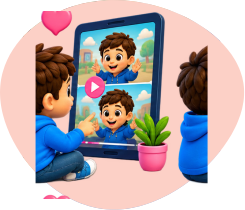
Learning and observation. Another child’s face in every frame. What they see, before what to do.

You'll notice:They spot an upset child before you point it out.
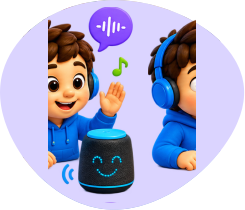
Language and listening. Audio your child answers back to, not audio that plays at them.
You'll notice:Their name lands the first time, not the third.
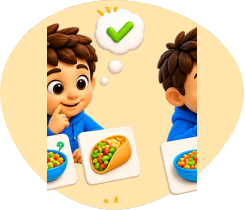
Body and nutrition. Meals they sit at, taste, and choose between. Not meals they are fed.
You'll notice:Fewer standoffs at the table.
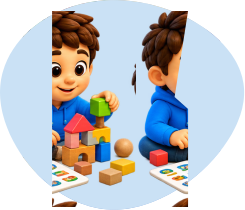
Hands, movement and doing. Real objects, real hands, off the screen. The same skill, before bed.
You'll notice:A handover that no longer costs you half an hour.
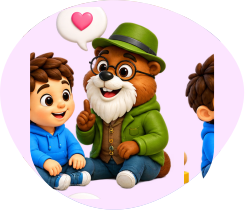
Mind, feeling and character. Your child says it out loud. He answers what they said, then names it. Mad, left out, not fair.
You'll notice:“I’m mad,” where a thrown plate used to be.
Five senses in. Five sides of your child out. Every one visible this month, not a promise about who your child becomes.

Built over two years by child specialists

700+
Videos

1200+
Audios

200+
Games

1200+
Offline Activities

Anonymous

Anonymous

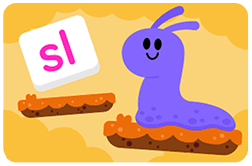
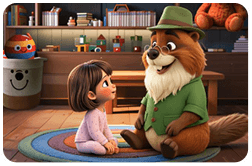
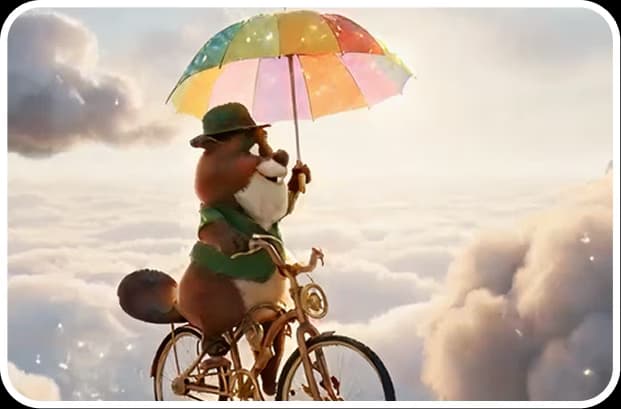
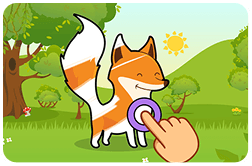

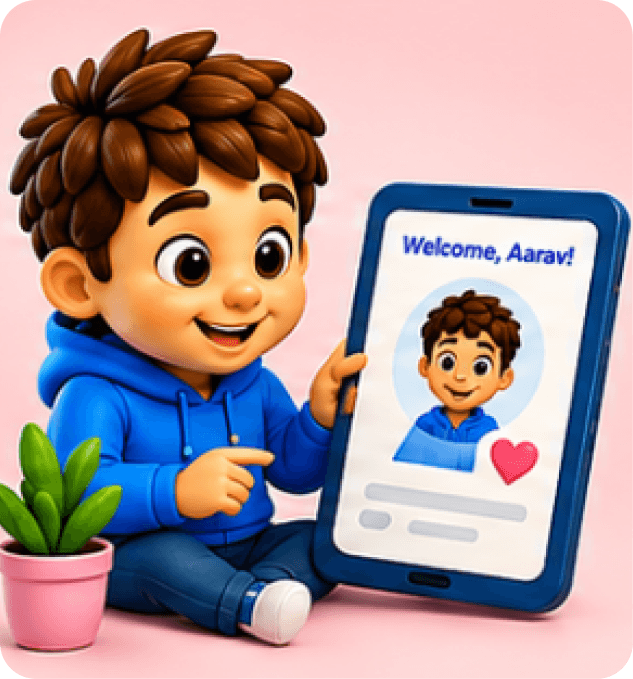
No levels, no scores, no child behind. Your child’s pace, not a grade level, and eleven tries if that is what it takes.
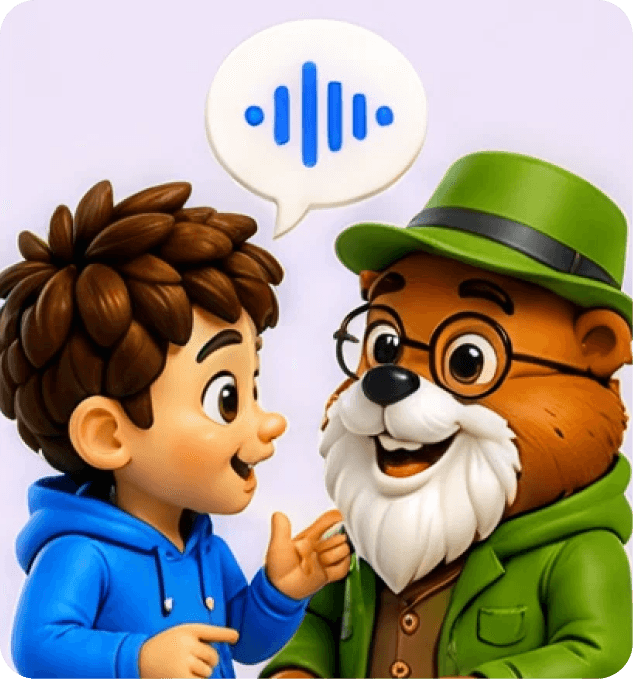
Not a video, not a script. He responds to what your child said, and remembers last time.

No autoplay, no countdown, no algorithm choosing next. When the day is done, it’s done, and the handover stops being a fight.
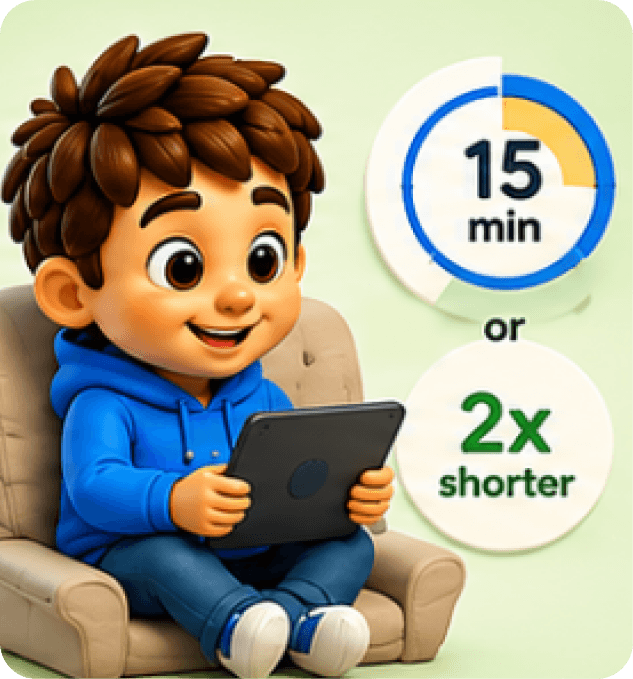
Fifteen minutes in one go or two shorter sittings. It holds its place, and nobody sits still just to finish.
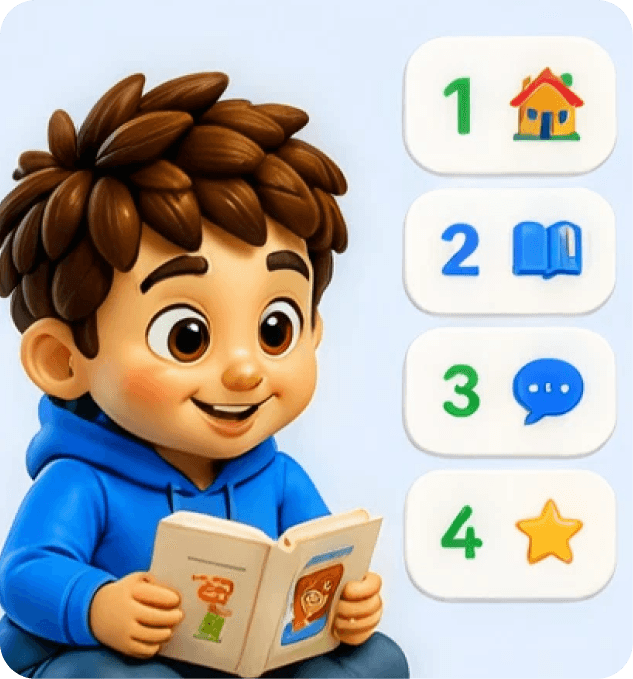
Same opening, same order, same ending. Nothing is a surprise, which matters more at this age than variety.
Every day ends off the screen, with you, a sibling or a friend. Less of your child’s day, not more.

Stretch, balance, breathe. A body that has been sitting gets its own part of the day, and a wound up child gets somewhere to put it.
"More than one million new neural connections form every second in the first years of life."
— Center on the Developing Child, Harvard University.

A Tantrum Is Not A Choice. Naming A Feeling Out Loud Calms That Reaction. So We Name It First.
Where families start → What we're building toward
 Meltdown every time the screen goes offThe reaction gets there firstBig feelings arrive unnamedCan’t say what’s wrongGrabs, doesn’t shareTantrums at every boundaryZoned out, unreachable, lost in contentSame show on repeatEvery situation handled from scratchMealtimes negotiated one plate at a timeA body that has been sitting all dayYou dread the handoverSchool asks for skills not yet built
 A shorter recovery at the handoverA gap opens before the reactionThe feeling gets a wordWords before the behaviourSharing that survives a playdateDisappointment that lasts minutesLeaning in, answering, askingA session with an endingNew situations use something learnedA child who sits, tastes and choosesTen minutes of doing, every dayScreen time that earns its placeKindergarten asks for two years’ habit
Not in ten years. This week. Recognise any of these?



It never becomes impossible. But at this age the habits are still forming rather than being undone, so it takes a fraction of the effort. That is true of how a child reads, how a child eats and how a child behaves, all of it, all at once.

Every child moves at their own speed, and some weeks go backwards. The Friday report shows what’s actually happening.
Every app wants your child’s attention. Todemy wants your child to grow up well.

 Primary goalHold attentionDevelop the whole child
 What it coversOne slice, sold separatelyLearning, body, mind and character
 Content designBuilt to keep watchingDesigned by child specialists
 How your child learnsWatchingAll five senses
 Response to your childAn algorithmA mentor who answers back
 Every child getsThe same thingTheir own pace
 How it endsAutoplay, next episodeA stopping point, on purpose
 Off the screenNothingTen minutes, every dayWhat you get backMinutes watchedA monthly report on the whole child
The difference isn’t just what Todemy does. It’s what everything else leaves out.
Some parents who went through our journey in the past years

“It helps my guilt about screen time because I feel she's actually learning unlike other apps.”
Emily
“It helps my guilt about screen time because I feel she's actually learning unlike other apps.”
Layla
“We finally found something age-appropriate that keeps him engaged and we can see him learning.”
Sarah
“The activities feel intentional and calm. He's excited to open Todemy instead of random videos.”
Marcus
“I love knowing the content is vetted and that I'm not handing him another attention-trap app.”
Priya

Your child is a specific age today. Every day between two and six shapes how they learn, how they eat, how they move and how they handle being told no, being left out, being disappointed. It doesn’t stop mattering at seven. It just gets harder.
Questions parents ask
It means Todemy does not stop at one part of your child. The daily session covers early learning, food and the body, listening and language, and the behaviour and character side. It is one programme rather than four apps, and one report rather than four.
No more than thirty minutes on the screen and ten minutes off it, and less for a younger child. A two year old does a much shorter session than a five year old. You can split it however works, and it holds its place.
It is how the whole programme is delivered. A child learns what they saw, heard, tasted, touched and said, so every part of their development reaches them through all five rather than through a screen alone.
No. He is an interactive mentor inside a closed app, built for one age group and one job. He cannot reach the open internet and cannot be asked about things outside the program. Every session he delivers was written and reviewed by child psychologists first.
No. It is built from what you picked, your child’s age, and what they managed last time. Two children the same age get different sessions.
None. No ads, no sponsored content, no third-party advertising of any kind. And no behavioral advertising to your child ever.
business@todemy.com reaches a person. Our full registered details are in the Children’s Privacy Notice.